Jenny | The Storyteller
Open the book of Pokfulam Village and discover its stories


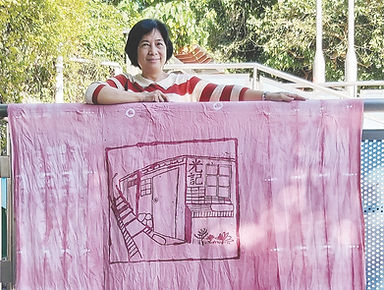
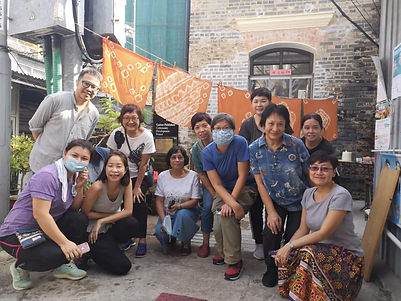
At the entrance to the village, along the steps, is the former staff quarters of the Dairy Farm Company. In the middle of the road is an old banyan tree that provides shelter for passers-by, and across the road is the Kwong Kee store. Jenny is one of the owner's daughters. Of the village aunties, Jenny is the only one who attended the former Pokfulam Government Primary School, which has now been converted into the Tak Shui International School. Although she moved away from Pokfulam after her marriage, Jenny often returns to visit her parents who live in the village.
Connecting with people
When Jenny's family moved to Pokfulam village in the 1960s, they opened "Kwong Kee" near the former Dairy Farm Staff Quarters, mainly for the Dairy Farm staff. As well as running Kwong Kee, Dad also had to raise pigs at Telegraph Bay. Looking back, Jenny's family had seven siblings and it wasn't easy to bring them up. Although her parents had many burdens and a very busy life, they were very willing to help others. In those days, when the economy was bad, people would come to borrow money or "pay for goods" - that is, pick up goods first and pay for them when they received their salaries at the end of the month - and her father would try to help as much as he could. Sometimes, when neighbours had to go to the doctor because they were not feeling well and wanted Mum to help look after their children, she would not mind the inconvenience and would even treat the children to snacks and let them feed the chickens to make them happy. Sometimes, when elderly people walked up the hill to go home and passed Kwong Kee, my mother would pull out a chair for them to take a break and offer them a glass of water. "My parents never told us about their generosity to others, but the neighbours told us later. It was only when the neighbours told us about their kindness that we realised our parents had helped them in their time of need," she says. The neighbours liked to feed their chickens with the leftover food. Mum used to joke that the chickens in the house were not just ours, but that other people also helped to feed them, so every year when she prepared chickens for feasts, she would always give the chicken legs to the neighbours who had fed the chickens with her earlier, because she felt it was important to give the best to the others! Sometimes we would make fun of her siblings by saying, "We raise our own chickens and give the best chicken legs to the neighbours! When Jenny was young, she did not understand why her mother always gave the best to the neighbours, but as she grew up, she understood that the relationship between people comes from the little things in life.
In 2013, Jenny was invited by members of the Pokfulam Village Conservation Team to join the docent programme. Having grown up in Pokfulam Village since childhood, she knows everything about the village and has a special affection for it. On the tours, whenever she sees a building, she easily associates it with a story and shares these little moments of village life with the public. Many of the tours are based on Jenny's personal experiences. For example, when we passed the 'well water source' she told us that in the past families in Pokfulam village did not have running water and many villagers, like herself, used to wash their clothes there. During heavy rains, rainwater would come down from the mountain and form a small waterfall, and during Easter and Ching Ming, a group of tadpoles would gather there. A group of children from the village would catch tadpoles with a net and put them in glass bottles, and then tell the participants about the life cycle of frogs. For children growing up in the city, this is a fun way to interact with children and a science lesson.
After each tour, participants would always tell Jenny that her tour was "full of enthusiasm". Over time, Jenny began to wonder what "full of enthusiasm" meant. Eventually she understood the reason. "Because I experienced the ups and downs of the village, I have so many memories here, and through my role as a docent, I got to know Pokfulam Village all over again, and my experience was deepened. I greeted the villagers from time to time as I led the tour. The visitors appreciated the neighbourly relationship here and found it amazing that people could be so close to each other. Because they live in a tower block, sometimes they don't even know their neighbours' names. For non-residents, they wouldn't understand the joy of village life if they hadn't experienced it".
Looking for craft materials in the lanes and alleys
When Jenny was a child, she used to make birthday cards for her classmates. As they live in a village, part of their daily routine is to walk through the narrow lanes of the village and up the hill. Whenever she saw an interesting plant, Jenny would go home and pick it, each time bringing a notebook in which she would cut the leaves of the flower to prevent them from wrinkling. In those days, every family had a thick printed telephone book, so Jenny would clip the leaves and when they were dry, she would use them to make greeting cards and bookmarks to give to her classmates. Although the leaves were only handmade materials, the theme of flowers and leaves changed with the seasons. Jenny is deeply satisfied when she remembers the surprised faces of her classmates when they received the handmade gifts. When she meets up with her old classmates, they still talk about those gifts and some of them have even kept them to this day!
"Every time I make something with natural materials, it gives me a feeling of freshness, because even if you can get a certain colour of leaves at the moment, the colour may not be the same when you go back to pick them, and not every plant can retain its original colour when it dries. Also, during the making process, the design seems very simple, but I have to concentrate on it, and sometimes I would think about where I was picking the leaves and flowers in my hand. If I go back to the same place after using them up, will they grow again? It's like dyeing with local plants. Each season we use natural materials that are in season to dye things with the current colours," she says.
For Jenny, the journey of dyeing is like a rollercoaster, giving her a sense of "highs and lows", like a life story. "When I put my head down to tie the fabric, my mind is clear and all I can think about is how to tie a pattern; when I dye the fabric, I put my hands in the dye bath and dip the fabric repeatedly without thinking too much, which makes me very relaxed. However, when I finished dyeing the cloth, I became excited and looked forward to seeing what the pattern would be when I untied the cloth, and the surprise in my heart made my emotions high.
The possibility of connecting village cultures through craftsmanship
From indigo dyeing to local plant dyeing, bamboo lantern making, flower pounding, rattan paper making, pottery and so on, the village aunties are constantly exploring new things and organising them into workshops where they learn from each other and appreciate each other's work, creating a beautiful picture and in fact growing up together.
In the world of pottery, Jenny started from scratch, which is why she pays so much attention to her pottery. But unlike fabric dyeing, where the results can be seen in as little as an hour, pottery is a process of sculpting, touching up, firing and glazing. At the pace of a village aunt's learning curve, it takes at least four weeks for all the processes to be completed and the ceramics fired. But this does not diminish Jenny's passion for ceramics. On the contrary, the fact that she cannot see the results immediately forces her to follow the steps, which is the best time to train her patience. "The first times I made ceramics, I worked very carefully and painted with great care, but in the end some pieces cracked during the firing process! I was not happy at first, but I had to tell myself to accept it because there was no point in being angry, it was better to find out why the pieces cracked and whether I had made a mistake in making the pieces. Then I'd work a little harder and do a better job next time, hoping to minimise the chances of it cracking. I know I'm not the best at it, but everyone has different qualities and strengths, and Brian told us in the first lesson, "Don't compare, because everyone is different". Doing ceramics helps me to improve my personal qualities and teaches me that I need to keep practising to be good at what I do and that I need to learn patience, so ceramics is a way of learning to be a better person.
It's harder to access these crafts in the village. A hobby can change a person's mood, so each time she practises, Jenny will continue to explore and appreciate the opportunity, and she is grateful for everything she has gained in the village. "Pokfulam Village has given me a lot of imagination that I never expected. It is like a big magnet that attracts different people and things, giving us all a chance to intertwine". Whenever she gives a talk in Pokfulam Village, Jenny, like other village aunties, will wear her own dyed clothes to show her pride in being a Pokfulam villager. "I hope that by dressing up I can create a dialogue and tell people about the long history of natural dyeing, its impact on the environment and the next generation, and the feasibility of practicing it in today's society. The preservation of traditional crafts and culture is as important as the village of Pokfulam, and the village aunties are putting this into practice by bringing traditional culture into their lives and reinterpreting it with contemporary techniques, hoping to bring another 'possibility' to everyone.
Natural dyeing reveals the colours of the seasons, but as no preservative chemicals are added, naturally dyed products are more prone to fading. Watching the colours change, we would like to preserve the seasons through the dyeing process, but fading is inevitable and the colours will eventually turn into traces. This is why natural colours do not remain in the world like chemical colours, which are harmful to the human body and the planet. Like natural objects, like the stories of each Pokfulam village, the natural colours will fade with time, and the characters in the stories will fade with age, but only feelings, thoughts and wisdom can be preserved through inheritance! While we understand this rule of nature, we must record the stories of our predecessors and pass them on from generation to generation. By making good use of traditional craftsmanship and hands, even if the fabric fades completely and the world keeps changing, we can still follow the changes of the earth and the seasons and bring back the natural colours of the moment.
"I want people to know why we are here, why we have the Village Aunties' Studio, it's because of the village of Pokfulam. It is the people and events of this village that have nurtured us and made the Village Aunties' Studio possible.